This post is also available in:
The Little Corn Island frog captivates nature lovers worldwide. This tiny amphibian thrives only on Little Corn Island. It faces severe risks today. Conservationists rally to save it. At Corn Island Realty, we highlight such wonders. They draw eco-conscious buyers to our properties.

Little Corn Island sits off Nicaragua’s coast. It boasts pristine beaches and lush jungles. However, rapid development threatens its biodiversity. The Little Corn Island frog symbolizes this delicate balance. Therefore, understanding its story matters. It connects real estate with environmental stewardship.
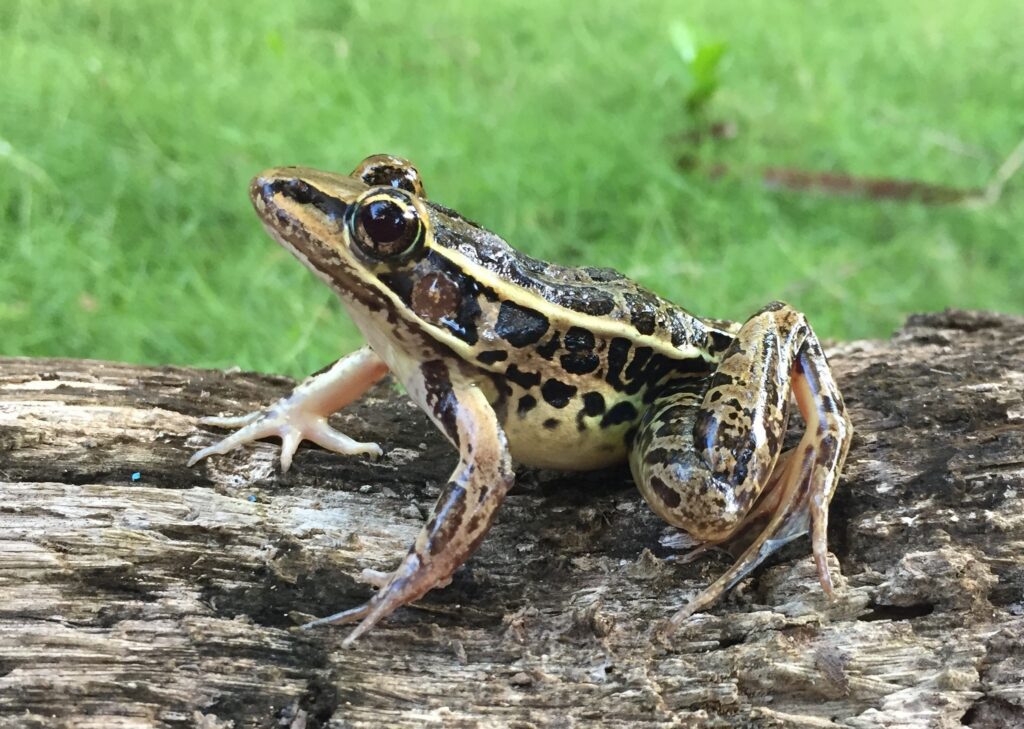
What is the Little Corn Island Frog?
Scientists call it Lithobates miadis. Locals know it as rana leopardo isleña. Thomas Barbour and Arthur Loveridge described it in 1929. This frog belongs to the Ranidae family. It features spotted patterns like other leopard frogs. Yet, it stands unique.
Its body shows olive-green or brown hues. Black spots dot its back. A light stripe runs along its side. Adults grow to about 5-8 cm long. Males call during rainy seasons. Their croaks echo through the night. Females lay eggs in water pools. Tadpoles develop there before metamorphosis.
This species adapts well to humidity. It needs constant moisture. Without it, survival drops sharply. Researchers note its breeding multiple times yearly. Such traits help in small habitats. But limits exist.
Habitat and Distribution on Little Corn Island
Little Corn Island spans just 3.48 square kilometers. The frog lives at low elevations, 0-20 meters above sea level. It prefers tropical moist lowland rainforests. Annual rain exceeds 4,000 mm here. This creates ideal wetlands.
Freshwater pools and marshes serve as breeding sites. These areas measure under 8 hectares. Mangroves and coral reefs surround the island. Yet, the frog sticks to inland jungles. No records exist elsewhere.
Endemism makes it vulnerable. Storms like hurricanes pose risks. The island lacks formal protections. Thus, habitat remains exposed. Visitors often hike these areas. They seek wildlife sightings.
Threats Facing the Little Corn Island Frog
Tourism booms on Little Corn Island. Hotels and resorts expand rapidly. This leads to habitat loss. Forests clear for buildings. Roads fragment the jungle.
Agriculture adds pressure. Coconut and banana farms spread. They convert rainforest land. Water diversion affects pools. Pollution seeps in too.
Human activities disturb breeding sites. Foot traffic erodes soil. Noise scares away frogs. Climate change worsens matters. Rising seas threaten lowlands. Droughts reduce water sources.
The IUCN lists it as Critically Endangered. Population size stays unknown. Trends appear stable but data lacks. One project could wipe it out.
Conservation Efforts for the Little Corn Island Frog
Experts call for protected areas. Surveys must assess numbers. Monitoring helps track changes. Nicaragua’s Red Book recognizes the risk.
Ecotourism offers hope. Sustainable practices preserve nature. Guides educate visitors. Funds support local initiatives. Organizations like Fauna & Flora work nearby. They strengthen partners.
On Ometepe Island, similar efforts succeed. Climate adaptation aids farmers. This reduces forest impacts. Little Corn could follow suit. Community involvement grows key. Residents lead patrols. They report threats.
International aid boosts research. DNA studies confirm uniqueness. Captive breeding explores options. Yet, challenges persist. Funding remains limited. Awareness spreads slowly.
Why the Little Corn Island Frog Matters to Corn Island Realty
At Corn Island Realty, we value biodiversity. The Little Corn Island frog highlights our commitment. Eco-friendly properties attract buyers. They seek sustainable living.
Investing here supports conservation. Our listings feature green designs. Solar power and rainwater harvesting prevail. Trails connect to nature spots.
Buyers enjoy wildlife viewing. Frogs add charm to jungle hikes. Preserving them enhances property value. It fosters community pride.
We link to other resources. Check our Corn Island Wildlife Guide for more. Externally, visit the IUCN Red List for details.
How You Can Help Protect the Little Corn Island Frog
Travel responsibly. Stay on marked paths. Avoid disturbing wetlands. Choose eco-lodges. They minimize impact.
Support local groups. Donate to conservation funds. Volunteer for surveys. Spread the word online.
If buying property, go green. Plant native trees. Create frog-friendly ponds. Join island cleanups.
Together, actions count. The frog’s survival depends on us. Let’s act now.
In conclusion, the Little Corn Island frog embodies Nicaragua’s natural wealth. Its story inspires protection. At Corn Island Realty, we promote balanced growth. Visit us to explore options. Experience this paradise firsthand. Your choice makes a difference.